
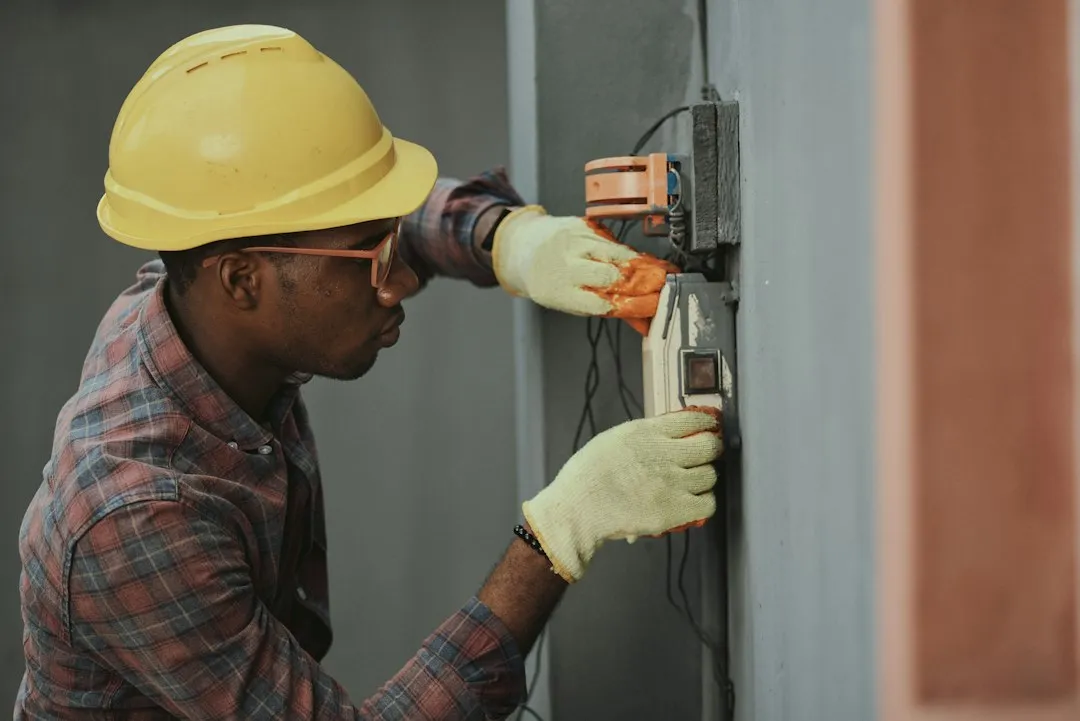
When homeowners stop buying $15,000 systems and start choosing $600 repairs, the definition of a “good” HVAC business changes.
You’re looking at an HVAC business. Revenue is $2M. Clean books, decent trucks, experienced crew. The broker tells you it’s a great shop with a strong install pipeline.
Then you pull the last four years of revenue mix and notice something: install revenue is shrinking. Not because the business is failing. Because the market is shifting underneath it.
Homeowners used to replace systems when they got old. Now they’re repairing systems until they physically cannot run. A $600 compressor repair versus a $15,000 system replacement is not a hard decision when your mortgage rate just reset and groceries cost 30% more than they did three years ago.
This isn’t anecdotal. The data is clear, the shift is structural, and if you’re buying an HVAC business in 2026, it changes every number in your valuation model.
The Numbers That Changed Everything
Let’s start with what actually happened.
According to HouseCall Pro’s industry data, repair revenue share across HVAC organizations jumped from 21.6% in Q4 2021 to 31.3% in Q4 2025. That’s not a blip. That’s a 45% increase in the share of total revenue coming from repair work over four years.
The volume numbers are even more dramatic. Repairs per organization climbed 64.7% between 2022 and 2025. That means HVAC shops aren’t just seeing a larger percentage of revenue from repairs — they’re doing dramatically more repair jobs in absolute terms.
Why? Because the math changed for homeowners.
System prices nearly doubled
A residential system replacement that cost $6,000–$8,000 in 2019 now runs $12,000–$15,000 or more. That’s a structural price reset driven by SEER2 efficiency standards, supply chain disruptions that never fully unwound, and tariffs adding 15–30% to equipment costs before the unit even hits your supply house.
ACHR News market reporting has tracked these equipment cost escalations in detail. The wholesale price increases are real, and contractors are passing them through because they have no choice.
The homeowner calculus
Put yourself in the homeowner’s shoes. Your 14-year-old system is struggling. The tech says the compressor is going. You have two options:
- Option A: Replace the compressor for $600. System runs another 2–3 years, maybe more.
- Option B: Replace the entire system for $14,500. Better efficiency, new warranty, peace of mind.
In 2019, when the replacement was $7,000 and interest rates were 3.5%, a lot of homeowners picked Option B. In 2026, with the replacement at $14,500 and their HELOC at 9%? They’re picking Option A. Every time.
The tax credit cliff
The 25C federal energy efficiency tax credit, which offered up to $2,000 toward qualifying heat pump systems, expired at the end of 2025. That credit was a meaningful nudge toward replacement for homeowners on the fence. Without it, the financial case for repair over replace got even stronger.
2026: The cyclical trough
According to BDR’s HVAC industry trend analysis, 2026 represents a cyclical trough in the replacement market. The combination of high equipment prices, expired incentives, elevated interest rates, and tariff uncertainty has created what some industry watchers are calling “The Great Correction.” Equipment shipments are down. Install pipelines are thinner. The phone still rings — but it’s ringing for repairs, not replacements.
This is the market you’re buying into. Understand it before you write an offer.
Why This Matters If You’re Buying
Here’s where this gets personal. You’re evaluating an HVAC business, and the seller is showing you three years of financials. Revenue looks solid — let’s say $2M average. The broker is quoting a multiple of 3.5x on SDE of $350K. That puts the asking price at $1.225M.
But what kind of revenue is that $2M?
Install-heavy revenue may be priced on a bubble
If 65% of that revenue came from system replacements during 2022–2024 — the tail end of the post-COVID replacement surge, boosted by tax credits and lower equipment prices — you need to ask a hard question: is that revenue repeatable?
The answer, increasingly, is no. Not at the same volume. Not at the same margins. Not with the same close rates.
A business valued on three years of install-heavy revenue may be priced on a market that no longer exists. The seller built those numbers in a different economy. You’ll be operating in this one.
For a deeper dive on how asking prices get built and where the assumptions break down, read our guide to HVAC acquisition math.
The margin difference matters more than you think
Here’s the thing most buyers miss: repair work and install work don’t carry the same margins.
- Install margins typically run 30–40%. You’re buying equipment at wholesale, marking it up, and paying a crew to spend 1–2 days on site. The equipment cost is a big chunk of the ticket.
- Repair margins typically run 50–65%. Your cost is a tech’s time, a truck roll, and a part that might cost $45–$200. The diagnostic skill is the product.
So when you calculate SDE, the mix matters enormously. A business doing $2M with 65% install revenue has a very different earnings profile than a business doing $2M with 50% repair revenue — even if the top line is identical.
The question isn’t “how much revenue?” It’s “what kind of revenue?”
The metric you need to track
Ask for the install-to-repair revenue ratio for each of the last three to four years. Plot it. If install share is declining and repair share is climbing, that’s not a failing business — but it is a business whose historical financials overstate future earnings if installs were the margin driver.
If repair share is growing and total revenue is holding steady or growing, that might actually be a stronger business than the numbers suggest. More on that below.
What a Repair-Strong Business Actually Looks Like
Not every HVAC business can capitalize on the repair shift. The ones that can have specific characteristics, and these are exactly what you should be looking for in an acquisition target.
Diagnostic capability is the moat
Install work requires competent technicians. Repair work requires excellent ones.
A tech who can diagnose a failed inverter board on a Daikin VRV system, source the part, and get it running in one visit is worth three guys who can bolt a Carrier system to a pad. Diagnostic capability is the competitive moat of a repair-strong business. It’s hard to hire for, hard to train, and impossible to fake.
When you’re evaluating a target, look at the bench:
- How many techs are diagnostic-capable versus install-only?
- What certifications do they carry? NATE? EPA 608 Universal? Manufacturer-specific?
- What’s the first-call fix rate? (A good shop runs 75–85%. Below 65% and you have a capability problem.)
If you’re buying a business and the diagnostic talent walks out the door with the seller, you don’t have a repair-strong business. You have an install shop with a repair problem. Read our equipment fleet assessment guide to understand what you’re inheriting on the hardware side.
Broad service range versus single-brand dependency
An install-focused shop can get away with being a Carrier dealer or a Trane dealer. They sell what they sell, they install what they install.
A repair-strong shop can’t afford that luxury. Homeowners don’t choose which brand breaks down. A business that can diagnose and repair across Carrier, Trane, Lennox, Rheem, Goodman, Daikin, Mitsubishi, and the growing fleet of imported heat pump brands has a dramatically larger addressable market than a single-brand shop.
During due diligence, ask what brands the techs are comfortable working on. If the answer is “we’re a Lennox dealer,” that’s fine for installs. It’s a limitation for repairs.
Maintenance agreements are the bridge
This is where the repair shift and service agreement value intersect beautifully.
A strong maintenance agreement book does two things for a repair-oriented business:
- It generates steady recurring revenue that smooths out seasonal swings. Repair demand is less seasonal than install demand, but it’s not flat. Maintenance agreements fill the gaps.
- It creates a pipeline for repair work. Every maintenance visit is a diagnostic opportunity. Your tech finds a failing capacitor during a spring tune-up, and that’s a $180 repair ticket you didn’t have to market for.
A business with 300+ active maintenance agreements and strong diagnostic capabilities is sitting on a recurring revenue engine that feeds itself. That’s what you want to buy.
Lower capital requirements
Install-heavy businesses tie up capital in equipment inventory. Condensing units sitting in a warehouse. Air handlers waiting for next week’s job. That’s $50,000–$150,000 in working capital just sitting there depreciating.
Repair-strong businesses carry parts inventory — contactors, capacitors, fan motors, control boards, common compressors — but the capital requirement is a fraction of an install inventory. Most parts can be sourced next-day from the supply house.
Lower capital requirements mean more of the SDE actually reaches your pocket. That matters when you’re managing cash flow as a new owner.
More predictable demand
Installs are project-based and lumpy. You land a $45,000 commercial job, and your month looks great. You lose a bid, and it looks terrible.
Repairs are volume-based and steadier. You might do 15–25 repair calls per tech per week. Individual tickets are smaller, but the aggregate is more predictable. And in a market where homeowners are choosing repair over replace, that volume is growing, not shrinking.
Predictability has direct value in an acquisition. It makes your SBA lender more comfortable. It makes your cash flow projections more reliable. It makes your first year less terrifying.
The Install-Heavy Business Isn’t Dead — But Price It Differently
I’m not telling you to avoid install-heavy HVAC businesses. Some of them are excellent acquisitions. But you need to understand when high install revenue is legitimate and when it’s a red flag.
When install revenue is real
- New construction markets. If the business does 40% of its install work in new builds, and the local housing market has strong permits and starts, that install pipeline has legs. New construction installs aren’t discretionary — the builder needs HVAC in the house before closing.
- Commercial contracts. Long-term commercial replacement contracts with property management companies, school districts, or municipal buildings are predictable and renewable. That’s not the same as one-off residential replacements.
- Geographic advantage. Some markets — fast-growing Sun Belt metros, for example — have sustained install demand driven by population growth. If you’re buying in Austin or Nashville, the install math is different than buying in Cleveland.
When install revenue is a red flag
- Tax credit-driven installs. If 25C credits were a major driver of replacement decisions in the target’s market, that revenue driver is gone as of December 2025. Ask how many installs in the last two years involved tax credit paperwork.
- One-time replacement cycles. A neighborhood full of 15-year-old systems can generate a burst of replacements. But once those systems are replaced, that revenue doesn’t come back for another 15 years.
- Discounting to fill the pipeline. If the business maintained install volume by cutting prices — running $10,999 system specials, financing at 0% through third-party lenders — the revenue is real but the margin is compressed. That shows up in SDE when you look carefully.
Recasting financials with a repair-forward projection
Here’s the practical exercise. Take the seller’s last three years of financials and recast them with a repair-forward assumption:
- Separate revenue into install, repair, and maintenance categories for each year
- Apply the trend: if repair share grew from 25% to 35% over three years, project it continuing to 40–45%
- Apply category-specific margins (30–40% for installs, 50–65% for repairs, 55–70% for maintenance)
- Recalculate SDE under the new mix
You might find that a business with declining total revenue actually has growing earnings because the revenue mix is shifting toward higher-margin work. Or you might find that a business with stable revenue has declining earnings because it’s losing high-margin repair work and replacing it with low-margin install discounting.
Either way, the recast tells you what the business is actually worth going forward — not what it was worth when equipment was cheaper and tax credits were flowing.
Adjusting the asking price
If install revenue is a meaningful portion of the business and you believe it’s at risk, you don’t have to walk away. You adjust the multiple.
A practical approach: apply your full target multiple (say, 3.5x) to repair and maintenance revenue, and a discounted multiple (2.0x–2.5x) to install revenue that you believe is at cyclical risk. The blended valuation gives you a defensible offer price that accounts for the shift.
Due Diligence Questions You Should Be Asking
Every acquisition has a due diligence checklist. The repair-replace shift adds specific questions that most buyers — and most brokers — aren’t asking yet. That’s your edge.
Bring these to your first serious conversation with the seller:
- What percentage of revenue came from installs versus repairs in each of the last three years? You want the trend, not just the snapshot. If they can’t break it out, that’s a data hygiene red flag in itself.
- How many of last year’s installs were driven by tax credit incentives? The 25C credit expired. If 30% of installs involved credit paperwork, that’s 30% of install demand that had an artificial tailwind.
- What’s the average ticket for a repair call versus an install? You need this to model revenue under different mix scenarios. Typical ranges: $250–$600 for repairs, $8,000–$15,000 for installs.
- How many technicians are diagnostic-capable versus install-only? This tells you whether the business can actually execute on repair growth. A team of five install crews and one diagnostic tech is an install business regardless of what the revenue says.
- What’s the customer callback rate? Callbacks on repair work kill margins. A shop running above 10% callbacks has either a quality problem or a parts sourcing problem. Either one costs you money.
- Does the business carry parts inventory or source on-demand? Parts inventory means faster repair completion and higher first-call fix rates. On-demand sourcing means lower capital but more return trips. Neither is wrong, but it affects your operating model.
- What’s the marketing spend breakdown between install leads and repair/service leads? A business spending 80% of its marketing budget on “new system” leads is going to have a harder time pivoting to repair-focused demand generation.
- What’s the average age of systems in the service area? If the installed base is mostly 5–8 years old (post-COVID replacements), repair demand will be modest for a few years. If the base is 12–18 years old, you’re sitting on a repair goldmine — and eventually a replacement cycle, on your timeline.
- Has the business invested in diagnostic tools and training in the last two years? Refrigerant analyzers, combustion analyzers, thermal imaging cameras, manufacturer-specific diagnostic software — these aren’t cheap, but they’re the infrastructure of a repair-capable shop. If the tool inventory is dated, you’re buying into a capital expenditure.
How to Value the Shift in Your Offer
You’ve done the diligence. You understand the revenue mix. Now you need to translate that understanding into an offer that makes financial sense.
The weighted multiple framework
Instead of applying a single multiple to total SDE, break the business into revenue streams and weight them:
| Revenue Category | Multiple Range | Rationale |
|---|---|---|
| Maintenance/service agreements | 3.5x–4.0x | Recurring, predictable, high margin |
| Repair revenue | 3.0x–3.5x | Growing demand, strong margins, less predictable than agreements |
| Install revenue (sustainable) | 2.5x–3.0x | New construction, commercial contracts |
| Install revenue (at-risk) | 1.5x–2.0x | Driven by expired credits, one-time cycles, discounting |
A real example
Two businesses. Both doing $2M in revenue. Both showing $350K in SDE over the trailing twelve months.
Business A: Install-heavy
- Install revenue: $1.3M (65%), with ~30% driven by tax credits
- Repair revenue: $400K (20%)
- Maintenance revenue: $300K (15%)
Apply weighted multiples to SDE contributions: sustainable installs at 2.75x, at-risk installs at 1.75x, repairs at 3.25x, maintenance at 3.75x.
Blended valuation: approximately $950K–$1.0M
Business B: Repair-strong
- Install revenue: $600K (30%)
- Repair revenue: $900K (45%)
- Maintenance revenue: $500K (25%)
Installs at 3.0x, repairs at 3.25x, maintenance at 3.75x.
Blended valuation: approximately $1.15M–$1.25M
Same top-line revenue. Same SDE. $200K+ difference in defensible valuation. And Business B is arguably the safer acquisition because its revenue mix is aligned with where the market is heading, not where it was.
Using the shift as negotiating leverage
Here’s the thing about sellers in 2026: most of them haven’t adjusted their mental model. They’re still pricing their business based on the install-heavy years. They remember 2022 and 2023 when they were doing $80K installs per week and the close rate was 65%.
That market is gone. You know it. ServiceTitan’s HVAC industry statistics and the HouseCall Pro data confirm it. The repair-to-install ratio has shifted structurally.
You’re not lowballing when you apply a discounted multiple to at-risk install revenue. You’re being accurate. Bring the data. Show the trend lines. Most sellers — especially the ones who’ve been watching their own install numbers soften — will recognize the reality even if they don’t like it.
Earnout structures that protect you
If the seller insists their install revenue will hold up, let them prove it. Structure an earnout:
- Base purchase price calculated on repair and maintenance revenue at full multiple
- Additional payments over 12–24 months tied to install revenue hitting defined thresholds
- If installs hold, the seller gets their full asking price. If they don’t, you paid what the business was actually worth.
Earnouts are common in HVAC acquisitions. The key is defining the metrics clearly and making the measurement period long enough to capture seasonal variation.
This protects you from the single biggest risk in buying an install-heavy HVAC business right now: paying for revenue that doesn’t repeat.
The Bottom Line
The repair-over-replace shift isn’t a temporary blip. Equipment prices aren’t coming back down. The 25C credit isn’t coming back (at least not in its previous form). Homeowners have learned that a $600 repair buys them another two years, and they’re going to keep making that choice.
As a buyer, this is actually good news — if you understand it. It means:
- Repair-strong businesses have a competitive moat that’s getting deeper
- Install-heavy businesses may be overpriced on historical revenue
- The seller’s asking price is negotiable with the right data
- Your due diligence needs to go beyond total revenue to revenue mix and trend
The definition of a “good” HVAC business is changing. The buyers who recognize that early will get better deals, build more resilient companies, and sleep better during their first off-season.
The ones who buy on last year’s numbers will learn the hard way.
Don’t be that buyer.