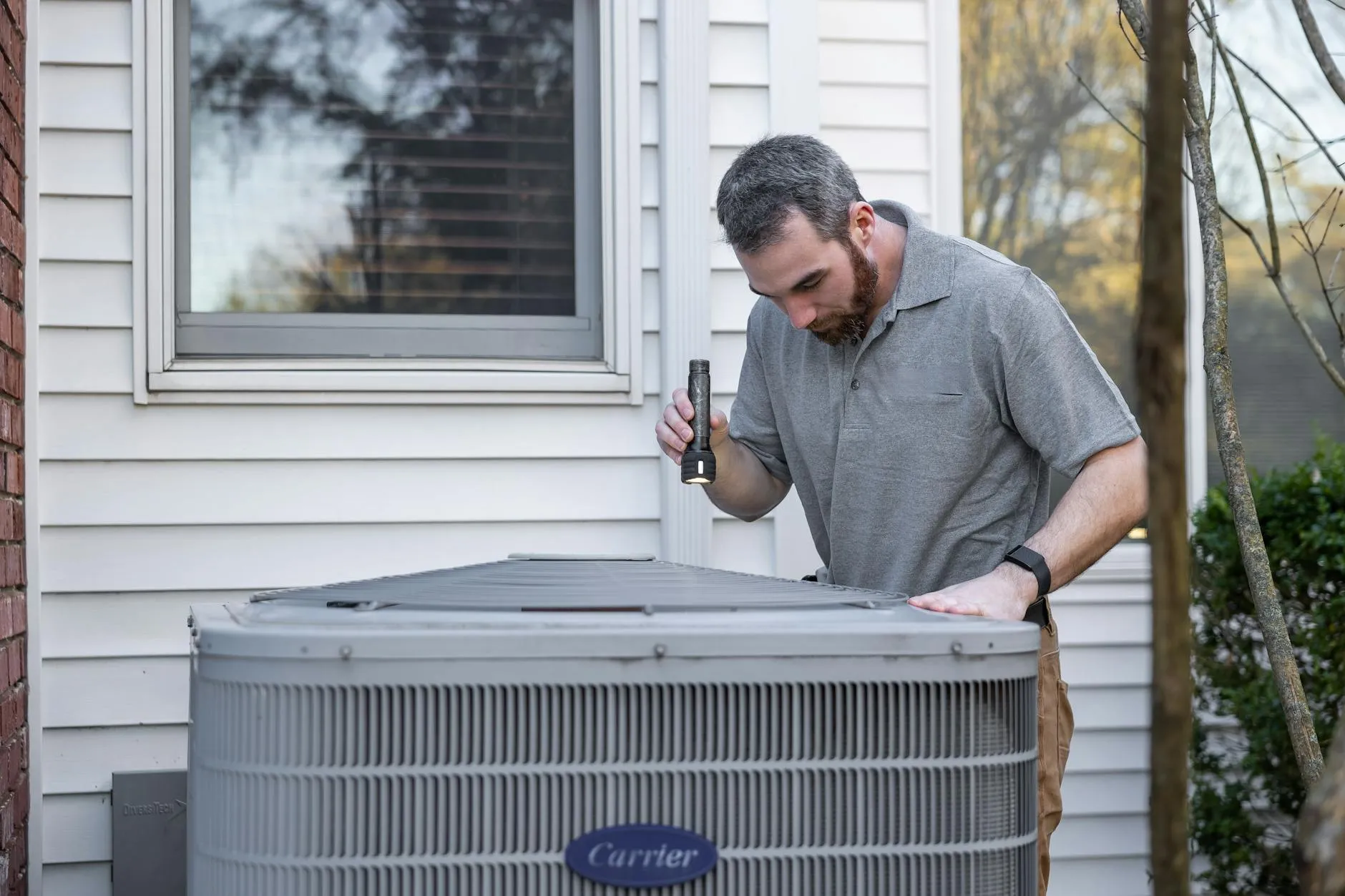

You didn’t take on six figures of debt to be the highest-paid technician at your own company. But that’s exactly what’s happening.
You just closed. You own it. The ink is barely dry on the SBA paperwork, the seller handed you the keys, and you walked into the shop Monday morning as the owner.
Then the phone rings. A compressor is down on a commercial unit across town. Your dispatcher looks at you. Your two techs are already on calls. You’re the best technician in the building — everybody knows it, including you.
So you grab your tools. You climb in the van. You run the call. You fix the unit. You feel useful, productive, competent. You earned revenue today.
And you just made the most expensive mistake in HVAC ownership.
Why the Truck Feels Like the Right Place
Let’s be honest about why this happens, because it’s not stupidity. It’s actually smart instincts applied to the wrong problem.
You’ve spent 10 or 15 years building a reputation on being the person who shows up, diagnoses the problem, and fixes it. Your identity is wrapped up in technical competence. You’re good at this. You’re probably better at it than anyone you employ.
And the management side? That’s unfamiliar territory. The financials are intimidating. The HR stuff feels abstract. Marketing sounds like something for people who can’t fix things. So you default to what you know — the truck, the tools, the condenser that actually makes sense.
Here’s what’s really going on:
- It feels productive. You completed a service call. You generated revenue. There’s a satisfied customer. That’s tangible.
- It avoids the uncomfortable stuff. You don’t have to learn QuickBooks if you’re on a rooftop.
- It fills the schedule hole. You’re short-staffed (everyone is), and running calls yourself seems cheaper than hiring.
- It protects the quality standard. Nobody does it as well as you. You’ve seen the callbacks from your junior tech.
Every single one of those reasons feels rational. And every single one of them is slowly strangling your business.
The Math That Should Make You Sick
Let’s run the numbers. I’m going to make this uncomfortable on purpose.
Your billable value on the truck:
- Average residential service call: $350–$500
- Calls per day (realistic, with drive time): 3–4
- Daily revenue generated: roughly $1,050–$2,000
- Your effective hourly rate as a working tech: $35–$45/hour in take-home value after overhead
That’s solid technician money. It’s also a ceiling.
Your management value off the truck:
- Reviewing AR aging and collecting on 60-day receivables: recovers $5,000–$15,000/month that’s currently leaking
- Coaching your CSR to improve booking rate by 10%: adds $8,000–$20,000/month in captured calls
- Analyzing tech performance and improving average ticket by $75: adds $4,500–$9,000/month across a 3-tech team
- Reviewing marketing spend and cutting dead channels: saves $1,500–$3,000/month in wasted ad spend
- Negotiating a better equipment pricing agreement: saves $10,000–$25,000/year
Daily management value creation: $2,000–$5,000. Conservatively.
That’s not theoretical. Those are the activities that the BDR growth framework and every serious HVAC business consultant will tell you drive real company value. The math isn’t close.
Every day you spend on the truck instead of in the office, you’re choosing $1,400 in revenue over $3,500 in value creation. Over a year, that gap is roughly $500,000 in unrealized business growth.
And it gets worse. Because while you’re on a rooftop replacing a contactor, here’s what’s not happening:
- Nobody’s reviewing yesterday’s invoices for missed line items
- Nobody’s following up on the three estimates your tech sent last week
- Nobody’s coaching the new CSR who’s booking at 62% instead of 85%
- Nobody’s checking that your Google Ads aren’t burning $200/day on “AC repair near me” clicks that never convert
- Nobody’s planning for the seasonal ramp that’s six weeks away
The business doesn’t stall immediately. It stalls at month 12 to 18, when the compounding effect of zero management attention catches up. Revenue flatlines. Margins erode. Your best tech quits because nobody’s been paying attention. And suddenly the business you bought is worth less than what you paid for it.
The 60-Day Delegation Deadline
Here’s the rule. It’s not a suggestion.
Hire your field replacement within 60 days of closing.
Yes, it’s $55,000–$70,000 per year in salary. Yes, you need to do it before you feel ready. Yes, it feels premature when you’re still figuring out where the office supplies are kept.
Do it anyway.
The technician recruitment playbook covers the full hiring process, but here’s why the 60-day window matters specifically:
Why 60 Days, Not 6 Months
- The longer you run calls, the harder it gets to stop. You build customer relationships on the truck. You become load-bearing in the schedule. Your dispatcher starts depending on you to fill gaps. By month six, pulling yourself off the truck means a scheduling crisis.
- Your management learning curve is steepest right now. Every week you delay learning the financial side is a week of decisions made on gut instinct instead of data. According to Contracting Business, the first-year failure pattern in owner-operators almost always traces back to delayed financial engagement.
- Candidates are available if you move fast. The HVAC technician shortage is real, but it’s not absolute. Techs move between companies constantly. If you start recruiting at close, you can have someone onboarded by day 60. If you wait until month six, you’re hiring in peak season when nobody’s looking.
What If You Can’t Afford It?
You can’t afford not to.
Run the math backward. A $60,000 tech costs you $5,000/month. Your management activities — just the four I listed above — generate $8,000–$15,000/month in recovered revenue, captured calls, and cost savings. The tech pays for themselves in month one.
If the business genuinely cannot absorb a $60K salary, you have a bigger problem. That means the business is so thin on margin that it needs immediate management attention — which you can’t provide from the truck.
Either way, the answer is the same: get off the truck.
The Four Highest-ROI Management Activities in Year 1
Once you’re off the truck, you need to know where to aim. Not everything matters equally. These four activities generate the most value in your first year of ownership, and they’re the reason your time in the office is worth three to four times your time in the field.
1. Financial Review: AR Aging and Margin Analysis
Time required: 2–3 hours per week
Most HVAC companies you’ll buy have money sitting in accounts receivable that nobody’s chasing. The previous owner got comfortable with “they’ll pay eventually.” Your job is to end that.
- Pull your AR aging report every Monday. Anything over 30 days gets a call. Anything over 60 days gets a firm call. Anything over 90 days gets a collections letter.
- Review job-level margins weekly. You’re looking for techs who consistently underbill, jobs where material costs ate the margin, and service agreements that are priced below breakeven.
- Establish your weekly operating rhythm around these numbers. When you know your margins by tech, by job type, and by month, you start making decisions that compound.

2. CSR Coaching: Booking Rate Improvement
Time required: 1–2 hours per week
Your phones are ringing. The question is whether those calls turn into booked jobs. The industry average booking rate is around 70–75%. A good CSR hits 85%. A great one hits 90%.
Every 10-point improvement in booking rate on an HVAC company doing 30 calls a day is roughly $6,000–$10,000 in additional monthly revenue. That’s revenue from calls you’re already paying for.
- Listen to recorded calls (you should be recording — if you’re not, fix that this week)
- Coach on objection handling: price concerns, timing, “I need to think about it”
- Track booking rate daily and review weekly
- Consider hiring your first office person if your current CSR is also doing dispatch, invoicing, and ordering parts — that’s too many jobs for one seat
3. Technician Development: Callbacks and Average Ticket
Time required: 2–3 hours per week
You know what good technical work looks like. Now you need to transfer that knowledge without being the one on the truck.
- Track callbacks by technician. Industry benchmark is under 2%. If a tech is at 5%, that’s a training issue, not a firing issue — yet.
- Monitor average ticket by tech. If your senior tech averages $450 per call and your junior tech averages $280, the gap isn’t talent. It’s presentation skills, diagnostic thoroughness, and confidence in recommending repairs.
- Ride along with each tech once a month. Not to do the work — to observe and coach.
- Build a simple scorecard: callbacks, average ticket, revenue per day, customer review mentions. Review it in your weekly one-on-ones.
4. Marketing Oversight: Lead Cost and Conversion
Time required: 1–2 hours per week
Most HVAC companies you buy will have a marketing setup that’s somewhere between “a guy handles our Google stuff” and “we don’t really do marketing.” Either way, money is being spent and nobody’s measuring return.
- Know your cost per lead by channel. Google Ads, LSA, organic, referrals, service agreements — each one has a different cost and a different close rate.
- If you’re spending $3,000/month on Google Ads and can’t tell me how many booked jobs that produced, you’re guessing. Stop guessing.
- The best marketing investment in Year 1 is usually Google Business Profile optimization and review generation — low cost, high impact, and it compounds over time.
These four activities are your job description for Year 1. Everything else is secondary.
The Identity Shift Nobody Talks About
Here’s the part that doesn’t show up in any business plan, and it’s the part that trips up more technician-buyers than any financial issue.
You have to stop being a technician.
Not permanently. Not in your soul. You’ll always know how to wire a disconnect and braze a line set. Nobody takes that from you.
But your identity has to shift from “person who fixes things” to “person who builds a company.” And that transition is brutal, because for a while, you’ll feel useless. You’ll sit in the office while your guys are out running calls, and you’ll feel like you’re not contributing. You’ll hear the phone ring with a service call and itch to grab the keys.
That feeling is the tax you pay for growing into something bigger.
Management is a skilled trade. I mean that literally. Reading a P&L is a skill. Coaching an employee through a performance issue is a skill. Negotiating with a vendor is a skill. Running a productive meeting that doesn’t waste everyone’s time is a skill. You’re not “leaving the field.” You’re building leadership skills for a higher-leverage position.
The emotional side of this is real and worth taking seriously. The guide on the emotional transition from technician to owner covers this in depth — the guilt, the imposter syndrome, the grief of leaving the work you loved. Read it. It’s not soft. It’s the thing that determines whether you survive Year 1.
A good benchmark: by month six, you should feel uncomfortable on the truck, not in the office. If it’s still the other way around, you haven’t made the shift yet.
Transitioning Your Customers Without Losing Them
The biggest fear: “My customers want me. If I stop showing up, they’ll leave.”
Some version of this is true. You have long-standing relationships. Mrs. Johnson has been requesting you for eight years. The property manager at Oakwood Commons only trusts you with their rooftop units.
But here’s what you need to understand: you don’t scale. There is one of you. There are hundreds of customers. The business cannot grow if every high-value customer is locked to one technician who also has to run the company.
Here’s how to transition without losing them:
- Introduce your replacement personally. Don’t just send a new tech. Call your top 20 customers. Tell them you’ve stepped into the ownership role and you’re introducing them to your lead technician, who you’ve personally trained and trust completely.
- Do the first visit together. Ride along on the first call with each key account. Let your replacement do the work while you’re there. The customer sees your endorsement in real time.
- Stay available for escalations — temporarily. For the first 90 days, tell key customers they can still reach you if something goes sideways. Almost none of them will call. But the safety net matters.
- Shift the relationship to business-level. You’re not their technician anymore. You’re the owner who personally ensures their account gets priority. That’s actually a higher-value relationship. Call them quarterly to check in. Send a thank-you note at the holidays. That’s owner-level customer retention, and it’s more durable than showing up with a wrench.
After 90 days, your replacement owns those relationships. If you hired the right person and coached them properly, the customers won’t just accept it — they’ll prefer it, because the new tech is focused entirely on their problem instead of splitting attention with running a company.
The 90-Day Transition Plan
Here’s the concrete timeline for getting yourself off the truck without crashing the operation.
Weeks 1–2: Ride-Along Phase
- Your replacement rides with you on every call. They watch. They learn your diagnostic approach, your customer communication style, and your quality standards.
- Introduce them to every key customer personally. “This is Mike. I’ve been training him. He’s going to be taking care of you.”
- Let them handle the tools on simpler calls while you observe. Correct privately, never in front of the customer.
- End of week 2: they should be able to run a standard residential service call start to finish while you watch.
Weeks 3–4: Supervised Solo
- Your replacement runs calls solo. You’re in the office, available by phone.
- Review every invoice they write at the end of each day. Not to micromanage — to catch the learning gaps. Are they missing line items? Underpricing? Failing to recommend maintenance agreements?
- Check in with customers after their first visit from the new tech. One quick call: “How’d everything go with Mike?” You’ll hear any issues before they become problems.
- Start your own management routine. Morning: financial review. Midday: CSR call monitoring. Afternoon: marketing metrics and planning.
Months 2–3: Fully Off the Truck
- You are not on the schedule. Period. Not as backup. Not “just for emergencies.” Not “only for big commercial jobs.”
- If you’re shorthanded and a call needs coverage, call a temp service or subcontract it. Your time in the office is worth more than your time on the truck. We already did the math.
- Your daily rhythm is now: financials, people, customers, growth. In that order.
- End of month 3: look at the HVAC company valuation benchmarks and compare to where you started. If you’ve been managing properly, your margins should be tightening and your revenue per tech should be climbing. That’s how you know the transition is working.
The Emergency Clause
You’re going to be tempted. A major system goes down, you’re the only one who knows that particular Carrier chiller, and it feels irresponsible not to go.
Here’s the rule: you get three emergency truck days in the first six months. That’s it. Three. After that, if your team can’t handle an emergency without you, you haven’t built a team — you’ve built a dependency. And that dependency is worth negative money when you eventually want to sell.
The Compounding Effect
Here’s what happens when you get this right.
By month six, your replacement is running the calls you used to run. Your CSR is booking at 82% instead of 71%. Your AR over 60 days has dropped by half. You’ve cut $1,800/month in marketing spend that wasn’t producing. Your average ticket is up $60 across the team because you’ve been coaching weekly.
None of those things would have happened from the truck.
By month 12, the business is generating 15–25% more net profit than when you bought it — not because you added trucks or territory, but because you managed it. You made the unsexy decisions. You read the reports. You had the uncomfortable conversations with the tech who was underperforming. You renegotiated the supply house pricing.
And now you own a business that’s actually worth more than you paid for it, instead of an expensive job that requires a commercial driver’s license.
The truck is where you came from. The office is where the value is. The sooner you accept that, the sooner your investment starts compounding.
Get off the truck.