
You spent six months finding the right HVAC business, negotiated hard on price, survived the due diligence grind — and then discovered you had zero insurance coverage the morning after closing. Here’s how to make sure your first day as an owner isn’t your last.
Insurance Is the Boring Part That Can End Your Business Before It Starts
Every acquisition guide treats insurance like a footnote. Three bullet points wedged between “hire a lawyer” and “update the Google listing.”
That’s not good enough.
Here’s the thing nobody tells you plainly: in an asset sale — which is how 80%+ of sub-$2M HVAC deals are structured — the seller’s insurance policies do not transfer to you. Not the GL. Not the workers’ comp. Not the auto. Nothing.
The seller’s policies covered the seller’s entity. You’re a new entity. On closing day, the seller’s coverage ends, and you’re standing there with a fleet of vans, a warehouse full of refrigerant, and ten employees climbing ladders — with no insurance.
Close on Monday without your own coverage? You’re operating illegally by Tuesday.
This isn’t hypothetical. State licensing boards can pull your contractor’s license for insurance lapses. Your SBA lender can call the loan. Commercial customers’ contracts have insurance requirements baked in — miss them, and you’re in breach before you’ve done a single service call.
I saw a buyer lose a $240,000 commercial maintenance contract in week two because he couldn’t produce a COI with the right limits. The building management company didn’t care about his explanation. They called the next contractor on the list.
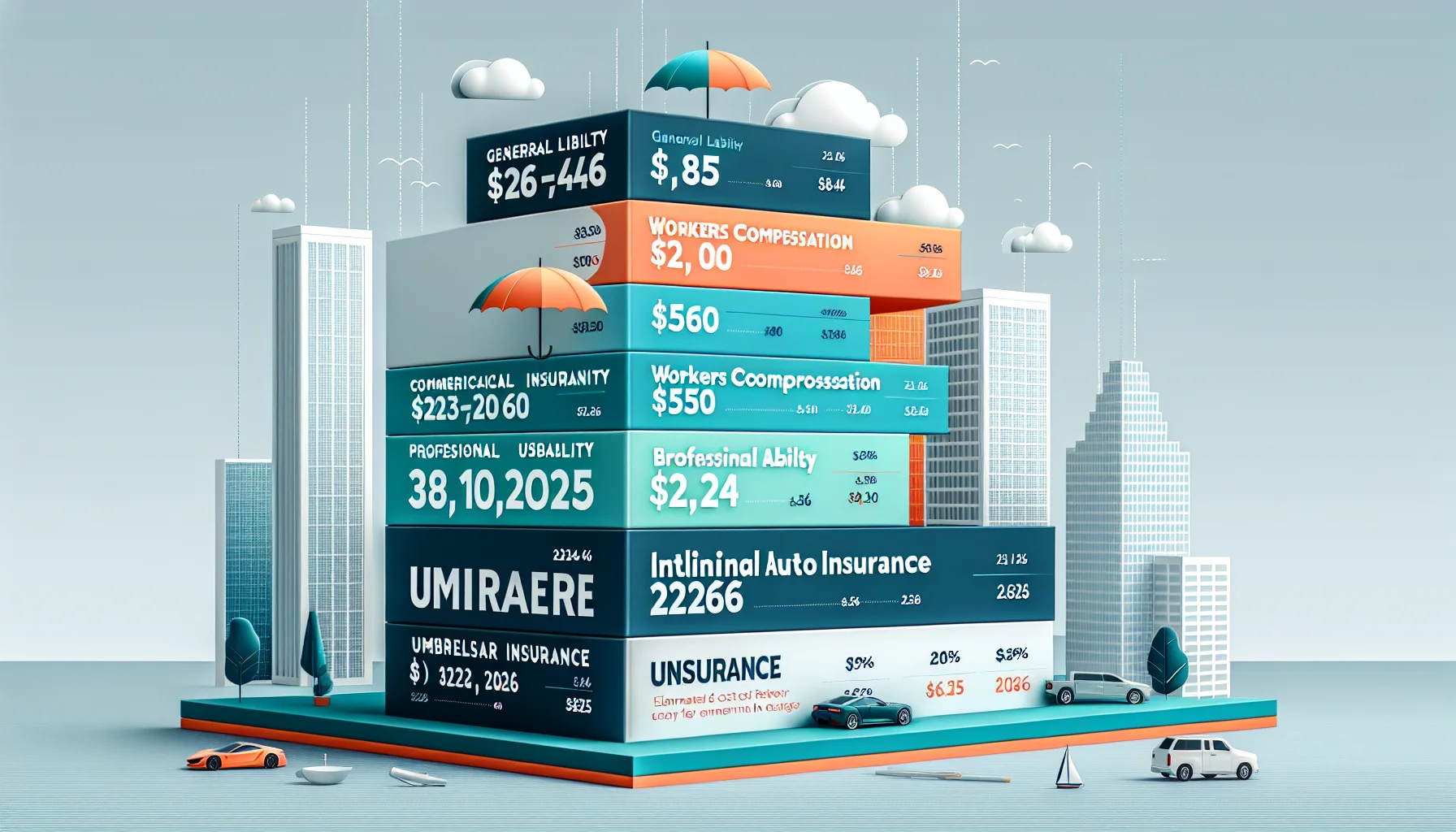
What You Actually Need: The HVAC Insurance Stack
This is the full stack. Not every HVAC business needs every piece, but you should understand all of them before you decide what to skip.
General Liability (GL)
Non-negotiable. Every state requires it for licensed HVAC contractors.
GL covers property damage and bodily injury caused by your work. Brazing torch starts a fire, refrigerant leak damages hardwood flooring, condenser pad cracks a foundation — these are GL claims.
State minimums vary wildly. Texas requires $300K/$600K. Florida requires $100K GL + $25K property damage. But don’t carry just the minimum — most commercial customers require $1M/$2M in their service agreements.
Typical 2026 cost: $2,000–$5,000/year for a small shop. Higher if you do new construction or commercial work.
Workers’ Compensation
Required in nearly every state once you have employees. Texas is technically optional, but good luck hiring experienced techs without it — and good luck if someone falls off a roof without it.
HVAC is classified as a high-risk trade. Typical 2026 cost: $3–$6 per $100 of payroll. A 10-tech shop with $800K payroll pays $24,000–$48,000/year. That’s a real line item. Budget for it.
Commercial Auto
Every service van needs commercial auto coverage. Your personal auto policy will not cover vehicles used for business.
Typical 2026 cost: $1,500–$3,000 per vehicle/year. Fleet of 10 vans: $15,000–$30,000/year. You inherit the vehicles, but driving records follow the individual employees — bad records mean higher premiums.
Professional Liability (Errors & Omissions)
Overlooked constantly. Shouldn’t be. E&O covers design errors — wrong system sizing, bad load calculations, ductwork layouts that don’t deliver. If a customer’s $18,000 system doesn’t heat their building because someone undersized the unit, this is the policy that responds.
Typical 2026 cost: $1,000–$3,000/year. Cheap relative to the risk. If the business does Manual J calculations, commercial system design, or equipment specification, you need this.
Inland Marine / Tools & Equipment
Covers tools, equipment, and materials in transit or at job sites. (It’s called “inland marine” for historical reasons that make no sense. Just roll with it.)
A fully loaded HVAC service van — recovery machines, vacuum pumps, manifold sets, leak detectors, combustion analyzers, copper fittings, refrigerant — carries $20,000–$40,000 in tools and parts. Your commercial auto won’t cover them if the van gets broken into. Inland marine does.
Typical 2026 cost: $500–$2,000/year.
Commercial Property
If you’re buying or leasing the shop/warehouse, you need this. Covers the building (if owned), inventory, office equipment, and business personal property. Your landlord’s policy covers the structure — not your stuff inside it.
Typical 2026 cost: $2,000–$8,000/year for a typical HVAC shop with warehouse.
Umbrella Policy
Sits on top of your GL and auto policies. Extra liability coverage beyond their limits. A tech causes a multi-car accident, damages exceed your $1M auto limit — the umbrella kicks in.
Typical 2026 cost: $1,000–$3,000/year for $1M umbrella. Strongly recommended.
The Full Stack Cost
For a typical 10-tech HVAC business doing $1.5M in revenue:
- General Liability: $4,000
- Workers’ Comp: $35,000
- Commercial Auto (10 vans): $22,000
- E&O: $2,000
- Inland Marine: $1,200
- Commercial Property: $4,500
- Umbrella: $2,000
Total: roughly $70,000/year, or about 4.7% of revenue.
That number should be in your post-acquisition financial model from day one. If it’s not, your SDE projections are wrong.
Successor Liability: The Debts You Didn’t Know You Were Buying
Asset purchases are supposed to shield you from the seller’s liabilities. In theory, you’re buying assets — not debts, not lawsuits, not problems.
In practice, there are exceptions. And in HVAC, several are common enough to worry about.
Environmental Claims
If the previous owner improperly disposed of refrigerants, dumped waste oil, or contaminated the property, you may be on the hook — even in an asset sale. The EPA doesn’t care about your purchase agreement.
What to do: Get a Phase I environmental assessment if you’re buying real estate. At minimum, ask about refrigerant handling practices and disposal records.
Outstanding Warranty Obligations
The seller promised Mrs. Henderson a 10-year warranty on her heat pump in 2022. Her compressor fails in 2027. Legally, it’s the seller’s obligation. Practically, she’s calling your number — and if you refuse the warranty, you lose the customer and the reputation.
What to do: Get a complete list of outstanding warranties. Understand the total exposure. Negotiate a warranty reserve or price reduction if significant.
Post-Close Workers’ Comp Claims
Employee gets hurt two weeks before closing, files the claim two weeks after. The seller’s policy should cover it (date of injury controls), but if that policy’s already cancelled, the claim gets messy — and you may get dragged in as the current employer of record.
What to do: Require the seller to maintain workers’ comp through closing and handle any pre-close injury claims. Put it in the purchase agreement explicitly. And prepare for your first post-close workers comp audit — uninsured subs and payroll misclassification create five-figure surprises.
Protecting Yourself
Two tools matter here:
- Indemnification clauses in your purchase agreement. The seller agrees to hold you harmless for any liabilities arising from pre-close operations. This is only as good as the seller’s ability to pay, which is why you should also consider…
- Representations and warranties insurance (R&W). For deals over $1M, R&W insurance is increasingly common. The seller makes representations about the business (no pending lawsuits, no environmental issues, no undisclosed liabilities). If those representations turn out to be false, the insurance policy pays — not the seller. Typical cost is 2–4% of the policy limit.
R&W insurance isn’t cheap, and it’s overkill for a $500K deal. But for a $1.5M acquisition with any complexity, it’s worth getting a quote.
The EMR Problem: Why Your Workers’ Comp Will Cost More Than the Seller’s
This one catches every first-time buyer off guard.
The seller’s workers’ comp premium is based on their Experience Modification Rate (EMR). EMR is a multiplier that reflects the employer’s claims history relative to the industry average. An EMR of 1.0 is average. Below 1.0 means fewer claims than expected. Above 1.0 means more.
The critical fact: EMR is tied to the employer, not the business.
When you buy the business through an asset sale, you become a new employer. New employers start at 1.0 — dead average — regardless of what the seller’s EMR was.
If the Seller Had a Great Safety Record
Say the seller ran a tight ship. EMR of 0.75. Their workers’ comp premium was 25% below the base rate. Nice.
Your EMR is 1.0. Your premium for the exact same coverage, same employees, same work — is 25–33% higher than what the seller was paying.
If the seller’s workers’ comp line item shows $28,000/year, yours might be $37,000. That’s a $9,000/year surprise if you budgeted based on the seller’s numbers.
If the Seller Had a Terrible Safety Record
EMR of 1.4. Their premiums were 40% above base rate. You start at 1.0 and immediately pay less than they did.
Small silver lining, but you’re probably also inheriting the safety culture that produced that EMR. Budget for safety training and process changes.
Plan for the Reset
- Budget workers’ comp at the 1.0 EMR rate, not the seller’s rate
- It takes 3 full years of clean claims history to earn a meaningful EMR discount
- Factor this into your post-acquisition financial projections
- Good safety practices from day one pay off in year four
The Insurance Timeline: What to Do and When
Don’t wait until closing week to figure this out. Here’s the timeline that works.

1. Sixty Days Before Close
Contact an insurance broker who specializes in HVAC or mechanical contractors. Not your uncle’s State Farm agent. Not the guy who does your homeowner’s policy. A commercial insurance broker who writes policies for contractors.
Give them the business details: revenue, payroll, number of employees, vehicle list, types of work performed, service territory. Get quotes for the full stack.
How to find one: Ask for referrals from ACCA (Air Conditioning Contractors of America), your local HVAC trade association, or your SBA lender. Your lender has probably financed other HVAC acquisitions and knows which brokers understand the space.
2. Thirty Days Before Close
Review quotes. Bind policies with effective dates that match your closing date exactly. Not the day after. Not “we’ll backdate it.” The closing date.
Confirm that your coverage meets your state’s licensing requirements. If your state requires $300K/$600K GL to maintain your contractor’s license, don’t bind a policy with $100K/$300K limits because it’s cheaper.
Also confirm your SBA lender’s requirements. They typically want:
- General liability naming the lender as additional insured
- Commercial property (if applicable)
- Life insurance on the borrower (often equal to loan amount)
- Sometimes key-person disability insurance
3. Closing Day
Verify every policy is active. Not “pending.” Not “bound effective tomorrow.” Active.
Get certificates of insurance (COIs) printed and ready. You’re going to need them immediately for:
- Your state/county licensing board
- Your landlord (if leasing the shop)
- Commercial customer contracts
- Your SBA lender’s closing file
4. First Week Post-Close
- Send updated COIs to every commercial customer. They’ll need them for their files, and some contracts require notification within a set number of days of an insurance change.
- Update all service agreement templates and proposal documents with your new insurance information.
- Notify your licensing board of the ownership change and provide proof of insurance.
- Set up your workers’ comp payroll reporting (many states require monthly or quarterly reporting).
5. Ongoing
Review your coverage annually, at minimum. As you add techs, buy vehicles, expand your service territory, or take on larger commercial projects, your insurance needs change.
A policy that was right at closing can be dangerously inadequate 18 months later if you’ve grown 30%.
The Insurance Due Diligence Checklist
These are the seven things to request or verify before you close. Non-negotiable.
- Request the seller’s loss runs for the past 5 years. Loss runs are the claims history — every claim filed, every payout made. This is the business’s safety and risk track record. Your insurance broker needs these to give you accurate quotes, and you need them to understand what you’re buying.
- Ask for the seller’s current EMR. The Experience Modification Rate tells you whether the business has a better or worse safety record than the industry average. An EMR above 1.2 is a red flag that warrants deeper investigation.
- Get copies of all active insurance policies. Not just the declaration pages — the full policies. Review coverage limits, exclusions, and endorsements. Pay special attention to any exclusions for specific types of work (e.g., rooftop units, refrigeration, new construction).
- Check for pending claims or litigation. Open claims can follow the business even in an asset sale, depending on how the purchase agreement is structured. Know what’s out there before you close.
- Verify the seller’s insurance meets current state licensing requirements. If the seller is underinsured relative to state requirements, that tells you something about how they run the business. It also means their license may already be at risk.
- Ask your broker to quote based on actual operations. HVAC businesses get lumped into generic class codes. A company that only does residential maintenance has a very different risk profile than one doing commercial new construction. Make sure your broker understands the actual work mix — it affects your premiums significantly.
- Confirm the seller will maintain tail coverage. Tail coverage (also called an extended reporting period) allows claims arising from the seller’s pre-close work to be reported after the policy ends. Without it, a customer who had a furnace installed last month by the seller — and whose house catches fire next month — may come after you because the seller’s policy won’t respond.
What Insurance Tells You About the Business
Insurance is due diligence. Not just a box to check — an actual window into how the business has been run.
Clean Loss Runs
Five years of minimal claims means the seller ran a safe operation. Techs were trained. Corners weren’t cut. This is a business worth paying a premium for.
High EMR or Frequent Claims
An EMR above 1.2 or a pattern of recurring claims (slip-and-falls, vehicle accidents, property damage) suggests either bad luck or bad management. Most of the time, it’s management.
Dig deeper. Ask about safety training, supervision practices, and hiring standards. The claims history is telling you something the seller’s pitch deck won’t.
Underinsured Seller
A seller carrying only state minimum coverage — or worse, lapsed coverage — is a seller who cuts corners. If they’re cutting corners on insurance, they’re probably cutting corners on maintenance, training, licensing, and compliance.
This doesn’t mean don’t buy the business. It means price the risk accordingly and budget for fixing the culture.
No E&O Coverage
If the business does system design, load calculations, or equipment specification and carries no professional liability insurance, they’ve been operating without a safety net on their most consequential work. Ask why. Sometimes the answer is ignorance. Sometimes it’s cost-cutting. Either way, factor it in.
The 3–5% Rule
For a healthy, well-insured HVAC business, total insurance costs typically run 3–5% of annual revenue. If the seller’s insurance costs are significantly below that range, they’re probably underinsured. Significantly above, and there may be a claims history or risk factor driving premiums up.
Either way, it’s worth understanding why.
Frequently Asked Questions
Can I just continue the seller’s insurance policies?
In an asset sale: no. The seller’s policies cover the seller’s legal entity. You’re a different entity. You need your own policies.
In a stock or entity sale (where you’re buying the LLC or corporation itself): possibly. The entity continues to exist, and its policies may remain in force. But you should still review every policy, update named insureds, and confirm coverage is adequate. The carrier may require re-underwriting based on the change in ownership.
What if there’s a gap between the seller’s policy ending and mine starting?
This is the nightmare scenario. Even a single day without coverage means you’re operating illegally in most states, you’re in breach of your SBA loan covenants, and you’re exposed to unlimited personal liability.
Avoid this at all costs. Bind your policies with effective dates matching the closing date. If closing gets delayed, call your broker and adjust the effective dates. Do not assume it will sort itself out.
How do I find an insurance broker who understands HVAC?
Start here:
- ACCA (Air Conditioning Contractors of America) — they maintain referral networks
- Your local HVAC trade association — other owners know who the good brokers are
- Your SBA lender — they’ve financed other HVAC deals and know which brokers deliver
- Other HVAC business owners — ask who they use and whether they’re happy
You want a broker who has written policies for at least 5–10 HVAC contractors. They’ll know the right class codes, understand the exposure points, and won’t waste your time with generic small business quotes.
Does my SBA lender require specific insurance?
Yes. Typical SBA 7(a) requirements include:
- General liability with the lender named as additional insured
- Commercial property insurance (if real estate is collateral)
- Life insurance on the borrower, often equal to loan balance
- Hazard insurance on any collateral
- Workers’ compensation
Your lender will give you a specific list. Get it early — your lender will not fund without proof of coverage.
How much should I budget for insurance in my first year?
For a typical small HVAC business (5–10 techs, $1M–$2M revenue), budget $45,000–$80,000/year for the full stack. Workers’ comp and commercial auto are the biggest line items. Use the seller’s costs as a starting point, then adjust upward for the EMR reset. Add 10–15% as a first-year buffer.
Insurance isn’t the exciting part of buying an HVAC business. It’s not why you got into this. But it’s the foundation that everything else sits on — your license, your lending, your customer contracts, your ability to put techs in the field legally. Get it right before you close, and you’ll never think about it again. Get it wrong, and it’s the only thing you’ll think about.