
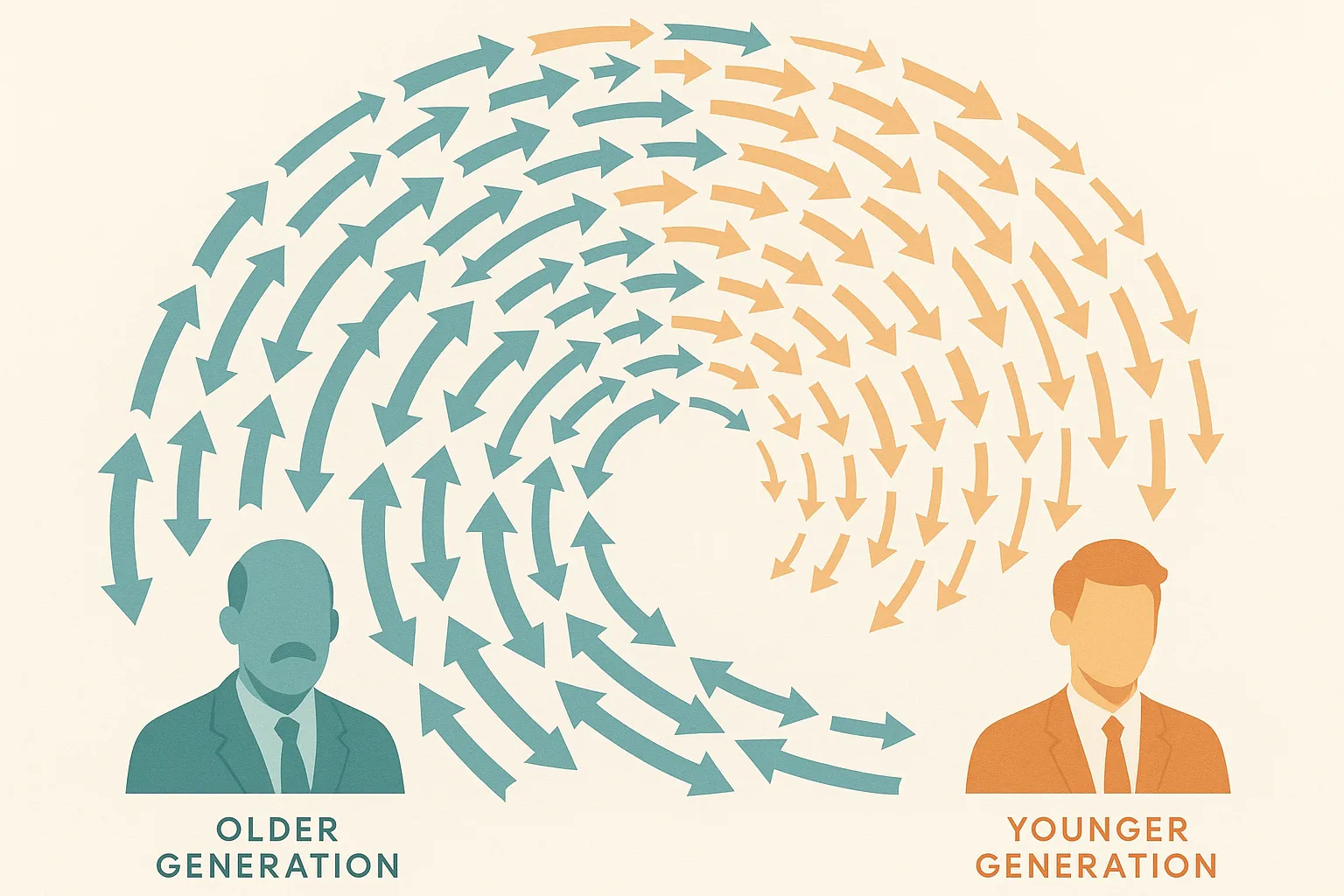
Six million businesses. Five trillion dollars. And a transfer system built for an economy that no longer exists.
In February 2026, the McKinsey Institute for Economic Mobility published a report that should be required reading for anyone thinking about buying an HVAC company. The headline: $5 trillion in enterprise value tied up in boomer-owned small businesses will need to change hands by 2035.
Six million businesses. Twelve million jobs. And a transfer system — to put it bluntly — that was never designed for this volume.
If you’re a technician thinking about buying your first HVAC company, or an owner looking to acquire a competitor, this macro context changes how you think about timing, competition, and positioning.
The Numbers: What McKinsey Actually Found
The key findings, in plain language:
- 6 million small and medium-sized businesses will face ownership transitions by 2035
- Annual exits could reach 665,000 per year — that’s 42% above 2011 levels
- The total enterprise value at stake: $5 trillion
- If these transfers succeed, they preserve up to 12 million jobs and $250 billion in annual local spending
But here’s the number that matters most for HVAC buyers: closure — not continuity — is the dominant exit path today.
Most of these businesses won’t sell. They’ll close. The owner will retire, lock the door, and walk away. Not because the business wasn’t valuable, but because nobody showed up with a plan to buy it.
Why “More Sellers” Doesn’t Mean “Easy Deals”
You’d think a flood of sellers would create a buyer’s paradise. It doesn’t — because the infrastructure for business transfers barely exists.
There’s no matching system. Unlike real estate (MLS, Zillow, Redfin), there’s no centralized, reliable marketplace for sub-$5M businesses. BizBuySell exists, but only captures roughly 15% of sub-$2M businesses that eventually sell.
Most sellers don’t know how to sell. A 62-year-old HVAC owner who’s been running the same company for 30 years has never done a business transaction. He doesn’t know what his business is worth, doesn’t have a broker, and doesn’t know how to vet a buyer. So he waits. And waits. And eventually just closes.
Most buyers don’t know how to buy. The SBA loan process alone filters out 80%+ of interested parties. Add in the complexity of due diligence, deal structuring, and transition planning — and the pool of buyers who can actually close a deal is tiny.
The financing bottleneck is real. SBA lenders require business appraisals, 10–20% equity injections, personal guarantees, and 3+ months of underwriting. The buyer who shows up without pre-qualification isn’t a serious buyer — the seller just doesn’t know that yet.
McKinsey said it directly: “Buying and selling a small business is often harder than starting one because the systems that support entrepreneurship in the United States are currently built for founding companies, not transferring them.”
The HVAC-Specific Dynamics Within the Transfer Wave
The HVAC industry mirrors the national trend — and amplifies it:
Owner demographics are top-heavy. Over 50% of HVAC company owners are age 55+. The retirement wave in HVAC isn’t a prediction — it’s happening now. Every year, more owners cross the threshold where selling becomes urgent rather than optional.
The technician shortage makes some businesses unsellable. If the owner IS the senior technician, and the company’s 110,000-person national labor shortage means you can’t replace him, that business may not be transferable at any price. The ones with teams and systems are the ones worth buying.

PE has absorbed the top tier. Private equity platforms have spent 2020–2026 rolling up the cleanest, largest HVAC companies in every major market. What’s left for individual buyers isn’t the dregs — it’s the messy middle: profitable companies with owner-dependent operations, imperfect books, and no professional management layer. These are exactly the businesses where a hands-on buyer adds the most value.
The $500K–$2M revenue band is your zone. Below $500K in revenue, most HVAC companies aren’t financeable via SBA. Above $3M, PE add-on buyers and family offices start competing. The sweet spot for individual acquirers — $500K to $2M in revenue — has the least institutional competition.
How to Position as a Prepared Buyer in a Flood of Unprepared Ones
The transfer wave doesn’t reward passive buyers. It rewards prepared ones. Here’s what “prepared” actually means:
Get SBA Pre-Qualified Before You Find a Target
Ninety percent of your competition won’t have this. SBA pre-qualification tells you exactly how much you can borrow, what equity you need, and what size business you’re shopping for. It also signals to sellers and brokers that you’re serious — not just browsing.
Build Relationships with Local Distributors
HVAC distributors — Johnstone Supply, Ferguson, Carrier distributor reps — know every contractor in their territory. They know who’s slowing down, who’s complaining about the grind, who just lost their lead tech. These relationships surface off-market deals before they hit any listing site.
Develop a Repeatable Process
Have a standard LOI template. Know your due diligence sequence. Have a CPA and attorney who’ve done HVAC acquisitions before. When the right deal appears, you can move in weeks rather than months.
The Speed Advantage
Prepared buyers close in 60–90 days. Unprepared buyers take 6–12 months — if they close at all. In a market where most sellers are emotionally exhausted and just want to be done, the buyer who can execute quickly has a structural advantage that no amount of money can replicate.
Resources like Lendesca exist specifically to help individual buyers navigate the financing complexity that separates serious acquirers from window-shoppers. Understanding your options before the deal starts puts you in the minority of prepared buyers.
Timing: Why 2026–2030 Is the Window
Several forces are converging right now:
- Estate tax exemption is dropping. The current $13.99M exemption is scheduled to fall to approximately $7M. For HVAC owners with businesses worth $2–5M, this creates genuine urgency to sell before the tax bite doubles. More motivated sellers are coming.
- PE platform formation is slowing. The major platforms are built. What’s happening now is add-on activity — PE firms buying companies to bolt onto existing platforms. This means they’re buying your future competitors, not your acquisition targets. The individual-buyer lane is more open than it was in 2022–2024.
- Interest rates are elevated but stable. Yes, SBA rates are in the 9–11% range. But stability means you can model deal economics with confidence. Uncertainty was worse than high rates.
- The wave hasn’t peaked. The bulk of boomer retirements will occur between 2026 and 2032. Buyers who position now — building relationships, getting qualified, understanding the process — will have first access to the best deals as they surface.
The Bottom Line
McKinsey’s report confirms what savvy HVAC buyers already sense: the timing is right, the competition is less fierce than it appears, and the biggest barrier to buying isn’t finding a business — it’s being prepared to close one.
Six million businesses will change hands or close. Every HVAC company that closes instead of selling is a lost opportunity for the technician who could have owned it, the employees who could have kept their jobs, and the customers who’ll scramble for a new contractor.
The transfer wave is here. The question is whether you’ll be ready when the right company surfaces — or whether you’ll still be figuring out how SBA loans work while someone else signs the purchase agreement.