

You ran the SDE math. The multiple looks fair. The service agreements are solid. Then you walk the shop yard, pop the hood on van number six, and realize the odometer reads 187,000 miles. Multiply that reality by twelve vans and the deal just changed.
Every HVAC acquisition has two price tags. The one the broker puts on the listing, and the one you discover when you inventory every van, every recovery machine, every set of gauges, and every half-empty cylinder of R-410A sitting in the back of the warehouse.
This article is about the second price tag. The one nobody mentions until you’re three months into ownership and a transmission drops.
The Listing Says “$1.5 Million.” The Fleet Says “Plus $400K.”
The asking price on an HVAC business is based on SDE multiples. Seller’s discretionary earnings times some number between 2.75x and 4.0x, depending on size, revenue mix, and how aggressive the broker is feeling. That number represents the value of the business — the cash flow, the customer list, the brand, the maintenance agreements.
It does not represent the capital expenditure you’ll need in the first two to three years to keep the operation running.
The fleet — vans, trucks, tools, shop equipment, parts inventory — is the second biggest financial factor after the business itself. And it’s the one most first-time buyers underestimate.
Book value is a fantasy. The seller’s depreciation schedule will show the fleet at some number that made their accountant happy at tax time. A 15-van fleet might show $200K on the books. Replacing those vans at 2026 prices? $600K or more. The IRS depreciation schedule has nothing to do with what Ford is charging for a Transit.
Key takeaway: The asking price covers the business value. The fleet assessment tells you what it’ll cost to keep the business running after you buy it. These are two separate numbers, and you need both before you make an offer.
The Service Fleet: Vans and Trucks
This is where the big money hides. A service van isn’t a vehicle — it’s a mobile workshop. And replacing one isn’t a trip to the dealership. It’s a $60K–$90K capital event.
What to evaluate on every vehicle
- Mileage. The single most important number. HVAC service vans rack up 25,000–35,000 miles per year. Most shops replace at 150K–200K miles.
- Age. A 2019 van with 90K miles tells a different story than a 2019 van with 160K miles.
- Maintenance records. Oil changes, transmission service, brakes, tires. No records means no confidence.
- Upfit condition. Shelving, ladder racks, power inverters, roof-mount pipe carriers. A van is only as useful as its upfit.
- Accident history. Run a Carfax or equivalent on every VIN. Body damage you can’t see causes problems you can’t predict.
What vans cost in 2026
The HVAC service van market is dominated by three platforms:
- Ford Transit — the workhorse. Most common in the industry.
- Ram ProMaster — solid alternative, good cargo volume.
- Mercedes Sprinter — premium option, higher maintenance cost.
New cost breakdown:
- Base van: $45K–$65K
- Upfit (shelving, ladder rack, inverter, pipe carrier, partition): $15K–$25K
- Total per van, road-ready: $60K–$90K
Used market: a 3-year-old van with 80K miles runs $30K–$45K before upfit. If the upfit transfers, you save $15K–$25K.
The mileage math that matters
If the fleet averages 120K miles and your techs drive 30K per year, you’re two to three years from needing replacements. That’s not a crisis — it’s a line item.
If the fleet averages 170K miles, you’re buying replacement vans in year one. That’s not a line item — it’s a second loan.
The same-age trap
Here’s a red flag that looks innocent on paper: all the vans are the same year.
The seller bought them all at once — maybe a fleet deal, maybe a good year — and they’ll all hit end-of-life at the same time. That means instead of replacing one or two vans per year (manageable), you’re replacing eight to ten in the same 18-month window (painful).
Staggered replacement is healthier. A fleet with vans ranging from 2020 to 2025 means you’re spreading CapEx over years instead of absorbing it in one gut punch.
The EV question
Electric service vans are becoming viable in 2026. The Ford E-Transit is in fleets. BrightDrop is making moves. Here’s the honest take:
- Lower operating costs. Fuel and maintenance savings are real — roughly $3K–$5K per van per year.
- Higher purchase price. An E-Transit runs $10K–$15K more than its gas equivalent.
- Range limitations. Most electric vans get 100–130 miles of real-world range with a loaded cargo area. Fine for urban/suburban routes. Not practical for rural service areas or techs covering 150+ miles a day.
- Charging infrastructure. You’ll need Level 2 chargers at the shop. Budget $2K–$5K per charging station installed.
Consider EVs for your urban routes. Don’t force them where they don’t fit yet.
Fleet size benchmarks
The standard ratio is one van per technician, plus spares.
- A 10-tech shop should have 10–12 service vehicles: 10 daily drivers plus 1–2 spare/shop vehicles.
- If the seller has 10 techs and 8 vans, somebody’s doubling up or the company is running leaner than it should.
- If the seller has 10 techs and 15 vans, ask why. Extra vans that aren’t running are either spares (good) or junk that hasn’t been disposed of (not good).
Tools and Test Equipment
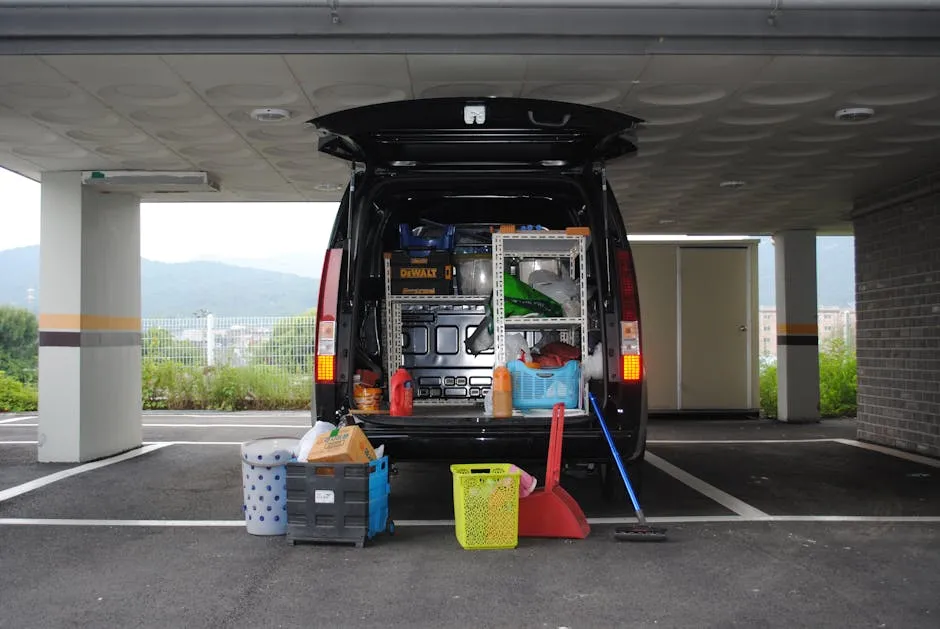
Every loaded HVAC service van is carrying $20K–$40K in tools and test equipment. Across a 10-van fleet, that’s $200K–$400K in rolling inventory that doesn’t show up as a line item on most deal summaries.
What’s in the van
Critical items to assess on every service vehicle:
- Manifold gauge sets — R-410A compatible at minimum. Check condition and calibration.
- Vacuum pumps — should pull below 500 microns consistently. Test them, don’t trust labels.
- Recovery machines — certified and current. This is EPA compliance, not optional.
- Leak detectors — electronic, calibrated, and functional. The $40 bubble solution doesn’t count.
- Multimeters — Fluke or equivalent. If the techs are carrying $15 hardware store meters, that tells you something about how the shop was run.
- Combustion analyzers — critical for furnace work. Calibration dates matter. A $3,000 analyzer that hasn’t been calibrated in two years is a liability, not an asset.
- Duct pressure testers — necessary for code compliance and performance verification.
- Refrigerant scales — certified accurate. Overcharging and undercharging both cost money.
The R-454B question
This is the big one in 2026. The transition to A2L refrigerants is not optional — it’s happening.
R-454B (the primary R-410A replacement for residential splits) requires updated equipment per EPA’s HFC phase-down rules:
- Recovery machines rated for A2L refrigerants
- Leak detectors sensitive enough for A2L’s lower flammability threshold
- Safety equipment — updated ventilation protocols and PPE
If the business you’re evaluating hasn’t invested in R-454B readiness yet, add $5K–$10K per van for the transition. On a 10-van fleet, that’s $50K–$100K that should be in your offer calculation. For a deeper dive on the full refrigerant transition landscape, see our dedicated guide.
Key takeaway: Ask the seller directly: “How many of your recovery machines and leak detectors are A2L-rated?” If the answer is “none” or “what’s A2L?”, you just found a significant CapEx item.
Condition, not just existence
A tool inventory list tells you what’s supposedly in the van. It doesn’t tell you whether it works.
- Gauge sets with cracked hoses leak refrigerant and give bad readings.
- Vacuum pumps with worn internals can’t pull a proper vacuum.
- Combustion analyzers drift over time without calibration.
Spot-check. Pick three vans at random and physically inspect the tool inventory against the list. If the list says “Fieldpiece SMAN460” and the van has a 15-year-old Yellow Jacket analog set, the inventory list is fiction.
Shop and Warehouse Equipment
The shop is where the big-ticket stationary equipment lives. This stuff doesn’t wear out as fast as fleet vehicles, but it’s expensive to replace and easy to overlook.
What to evaluate
- Overhead cranes — if the shop does commercial work, there may be a crane for handling rooftop units. Inspect for certification and load testing.
- Forklifts — check hours, maintenance records, propane vs. electric.
- Air compressors — industrial compressors have a long life but need regular maintenance. Check oil, belts, and tank condition.
- Sheet metal equipment — brakes, shears, and rollers for ductwork fabrication. Manual vs. CNC matters for throughput.
- Welding equipment — MIG, TIG, brazing stations. Condition and gas supply contracts.
- Vehicle lift or pit — if the shop does its own fleet maintenance, this saves thousands per year in outside mechanic costs.
HVAC-specific items
- Refrigerant storage. EPA 608 compliance requires proper storage and documentation. Check that storage meets current regulations and that recovery cylinders are in date.
- Parts inventory organization. A clean, labeled, organized parts room means the previous owner ran a tight operation. A pile of boxes in a corner means you’re going to spend your first month figuring out what you actually have.
Lease vs. own
Some shops lease their larger equipment — forklifts, copiers, CNC sheet metal machines. These leases don’t always transfer cleanly in an acquisition.
Get every lease agreement. Review:
- Monthly payment and remaining term
- Buyout provisions
- Whether the lease is assignable or requires a new agreement
- End-of-lease obligations (return condition, penalties)
You may be inheriting $2K–$4K per month in lease payments that aren’t reflected in the SDE calculation.
The building itself
If the business occupies a leased facility (most do), inspect the building like you’d inspect a house you’re buying.
- Roof condition — leaks destroy inventory and equipment.
- HVAC system — yes, the irony. The HVAC company’s own building should have a functioning system. If it doesn’t, that tells you something.
- Electrical capacity — enough for EV chargers if you go that direction? Enough for welders, compressors, and shop equipment running simultaneously?
- Lot drainage — standing water in the yard corrodes vehicles and creates slip hazards.
- Lease terms — remaining term, renewal options, rent escalation clauses. A 5-year lease with 2 years left is a ticking clock.
HVAC Parts and Refrigerant Inventory
The seller will hand you an inventory list. It will have a dollar figure at the bottom. That figure is probably wrong.
What’s on the list
Typical HVAC parts inventory includes:
- Condensing units and air handlers (new, in boxes)
- Furnaces
- Line sets and copper fittings
- Ductwork materials (flex, rigid, fittings)
- Filters (every size imaginable, plus sizes nobody has ordered in three years)
- Refrigerant cylinders (R-410A, R-22, R-454B, maybe some R-407C)
- Electrical components (contactors, capacitors, relays, thermostats)
- Miscellaneous supplies (sealant, tape, hangers, fasteners)
The valuation trap
Inventory is usually valued at cost — what the seller paid for it. This creates two problems:
- Some items have appreciated. Copper fittings bought in 2022 are worth more at 2026 prices. Refrigerant bought before price spikes may be worth 2–3x what was paid.
- Some items have become worthless. Parts for equipment lines the company no longer represents. Filters for discontinued units. Line sets in sizes nobody installs anymore.
The net effect usually skews negative. The stuff that’s worth more gets used. The stuff that’s worth less sits on shelves.
R-410A: the tricky one
R-410A is still legal for servicing existing systems. It is no longer legal for new installations in residential split systems as of January 2025.
What this means for inventory valuation:
- R-410A cylinders have service value — existing systems will need refrigerant for years.
- But the long-term demand curve is declining. Price accordingly.
- Don’t pay 2023 prices for a commodity with a shrinking market.
The 10–20% rule
Key takeaway: Expect 10–20% of any HVAC parts inventory to be slow-moving or obsolete. If the seller values inventory at $80K, your real number is probably $64K–$72K. Negotiate based on what’s actually usable, not what’s technically on the shelf.
Walk the inventory yourself. Open boxes. Check dates. If a condensing unit has been sitting in plastic wrap since 2021, ask yourself whether it’s inventory or archaeology.
The Fleet Assessment Checklist
Before you make an offer, you need data. Here’s exactly what to collect:
- Get the complete vehicle list. Year, make, model, mileage, VIN for every vehicle the company owns or leases. No exceptions. Include the owner’s truck if it’s titled to the business.
- Request maintenance records for every vehicle. Oil changes, brake jobs, tire replacements, transmission service. A shop that keeps good vehicle records probably keeps good customer records too. The inverse is also true.
- Check accident and body damage history. Run a Carfax or equivalent on every VIN. Frame damage on a service van is a ticking clock.
- Inspect upfits on every van. Shelving condition, ladder rack security, power inverter function, roof-mount pipe carrier integrity. A new upfit is $15K–$25K. A damaged one is a safety hazard.
- Get the complete tool inventory — by van and by shop. Then spot-check at least 30% of it in person. Lists lie. Vans don’t.
- Verify calibration dates on all test equipment. Combustion analyzers, refrigerant scales, pressure gauges, leak detectors. Out-of-calibration equipment produces unreliable results and potential code violations.
- Check R-454B/A2L readiness. How many recovery machines are A2L-rated? How many leak detectors? Does the shop have updated safety protocols? The transition isn’t coming — it’s here.
- Review parts inventory with fresh eyes. Walk the warehouse. What’s current stock that moves regularly? What’s gathering dust? What’s obsolete? The difference between the seller’s number and your number is negotiation leverage.
- Identify every leased piece of equipment and get full lease terms. Monthly cost, remaining term, buyout option, transferability. Leases are obligations you’re inheriting.
- Calculate replacement cost for everything over 5 years old or over 100K miles. This is the number that matters. Not book value. Not what the seller paid. What it costs to replace at today’s prices.
Turning the Assessment Into a Number
You’ve walked the shop, inspected the vans, checked the tools, counted the inventory. Now you need to turn all of that into a dollar figure that affects your offer.
Step 1: Total replacement cost estimate
Calculate what it would cost — today — to replace every asset that’s past its midpoint of useful life. This isn’t what you’ll spend. It’s the ceiling.
Step 2: Weight by urgency
Break the total into three buckets:
- Immediate (Year 1): Anything that will fail or become non-compliant within 12 months. Vans over 180K miles. Equipment that can’t pass inspection. Tools that are non-functional.
- Near-term (Years 2–3): Assets approaching end-of-life. Vans at 120K–180K miles. Equipment needing major service. R-454B transition costs.
- Long-term (Years 4–5): Assets with remaining useful life but will eventually need replacement. Newer vans. Shop equipment in decent condition.
Step 3: Build the CapEx budget
Add up the three buckets. This is your post-close capital expenditure budget — the money you’ll need on top of the acquisition price to keep the business running.
Example walkthrough
Here’s what this looks like on a real deal:
- Fleet: 12 service vans, average 110K miles. 4 need replacement in year 1 (over 160K), 4 more by year 3. Replacement cost: 8 vans x $60K–$90K = $480K–$720K.
- Tools: R-454B transition needed on 10 vans at $7K each = $70K.
- Inventory: $80K listed, $15K obsolete = $65K usable value (a $15K reduction).
- Shop equipment: Forklift needs replacement ($35K), sheet metal brake is 20 years old ($25K) = $60K near-term.
Total post-close CapEx: $610K–$850K over 3 years.
That number changes everything about the deal. This is exactly the kind of figure that should feed into your acquisition math.
Equipment financing in 2026
The good news: fleet and equipment financing is separate from your SBA acquisition loan. The bad news: it’s still money.
- Current rates: 6.5%–9.2% for prime borrowers with business history. Higher for first-time owners.
- Typical terms: 3–5 years for vehicles, 5–7 years for major equipment.
- Monthly reality: $500K in fleet replacement at 7.5% over 5 years = roughly $10,000/month in payments.
That $10K/month comes straight out of the cash flow you’re buying the business for.
The conversation with the seller
This is where the fleet assessment earns its keep. You’re not walking in and saying “I want a discount.” You’re walking in with data:
“Your SDE is $350K. The 3.5x multiple puts the asking price at $1.2M. I can see how you get there. But I need $600K in fleet and equipment CapEx over the next three years — $200K of it in year one. That’s $10K/month in equipment financing that comes directly out of the SDE I’m paying a multiple on. We need to talk about how that affects the price.”
That’s not a lowball. It’s math. And sellers — at least reasonable ones — respect math more than feelings.
Key takeaway: Your offer price should reflect the total cost of ownership, not just the SDE multiple. A business with $350K SDE and a fleet that needs $600K in CapEx is a fundamentally different deal than one with $350K SDE and a fleet that’s good for five more years.
Frequently Asked Questions
Should I walk away from a deal with an old fleet?
Not necessarily. An aging fleet is a negotiation lever, not a deal-killer. If the SDE is strong and the customer base is solid, an old fleet just means the seller hasn’t been reinvesting — and that should be reflected in the price. The math either works at a lower purchase price or it doesn’t. Run the numbers.
Can I finance fleet replacement separately from the acquisition?
Yes, and this is important. Equipment financing is a separate product from your SBA 7(a) acquisition loan. Banks and equipment lenders evaluate fleet loans based on the collateral (the vehicles) and your business cash flow. You don’t need to stuff everything into one loan.
Some buyers close the acquisition with SBA financing, then immediately open an equipment line of credit for fleet replacement. This keeps the deals clean and often gets you better terms on both.
How do I value the upfits separately from the vehicles?
Upfits have their own useful life, independent of the vehicle. A properly built upfit — aluminum shelving, steel ladder rack, quality inverter — can last 8–10 years. The van itself might last 6–7 years in service use.
A 5-year-old van with a 2-year-old upfit is worth meaningfully more than the same van with the original upfit. If the seller recently re-upfitted older vans, that’s value. If the upfits are original and showing their age, factor in $15K–$25K per van for the next round.
Should I switch to electric vans?
The practical answer in 2026: consider EVs for urban and dense suburban routes where daily mileage stays under 100 miles. The fuel and maintenance savings are genuine.
Don’t switch for rural routes, long-range service areas, or any tech regularly covering 150+ miles per day. The range math doesn’t work yet, and getting stranded with a van full of tools and a customer waiting for heat in January is not a viable business strategy.
Also factor in charging infrastructure. If your shop doesn’t have Level 2 chargers, budget $2K–$5K per station plus potential electrical panel upgrades. It’s an investment, but it needs to make sense for your actual routes, not for a press release.
The fleet assessment isn’t the exciting part of buying an HVAC business. Nobody got into this industry because they love spreadsheets full of VINs and mileage figures. But the buyers who do this work before they sign are the ones who aren’t blindsided six months later when the transmission on van number six finally gives up. And van number seven. And van number eight.
Do the work. Get the numbers. Let the math make the decision.


