

The person across the table signs your paycheck. Your every move between now and close is being watched by coworkers. One careless comment could blow up everything. This is how you do it without torching the relationship — or the business.
You’ve been thinking about it for a year.
Maybe longer. You’ve watched the old man slow down. You’ve watched the kids move away. You’ve watched a key tech leave and wondered how much longer the business holds together under him alone.
And somewhere in the back of your mind, a thought has gotten louder: I could buy this place.
Here’s the thing. Statistically, you’re right to be thinking about it. Internal buyouts — employee-to-owner transitions — are one of the most common exit paths for small HVAC businesses, precisely because outside buyers are harder to line up than people think. The owner knows it. You know it. What neither of you knows is how to actually get from “I could see you owning this” to a signed purchase agreement without blowing up the relationship.
Most employee-to-owner deals fall apart in the conversation phase — long before financing, diligence, or paperwork ever enter the picture. The tech brings it up wrong, the owner takes it wrong, and suddenly there’s a weird tension every morning for eighteen months until the tech leaves.
Let’s make sure that doesn’t happen to you.
Why This Deal Is Different From a Normal Acquisition
Most of the acquisition playbook on this site assumes a stranger-to-stranger deal: cold outreach, NDA, data room, formal diligence. An internal buyout rewrites the rules, because you and the seller already share almost everything: a workplace, a team, a schedule, a rhythm.
The advantages you have
- You actually know the business. You’ve seen real job tickets. You know which customers are PITA and which pay on time. You know which tech is riding on reputation and which is actually carrying the shop. No outside buyer can learn this in 60 days of diligence.
- The owner trusts you — or at least knows you. Trust is half the deal friction in a normal acquisition. You start with it.
- You know the real financials. You’ve seen the dispatch board on slow weeks. You’ve heard the owner complain about the truck that’s always down. You have calibrated ground truth that no P&L will give you.
- Your transition risk is near zero. Employees know you. Customers know you. The 90-day crash-and-burn risk that kills outside buyers doesn’t apply.
The disadvantages you need to respect
- Information asymmetry works both ways. The owner knows what you’re paid, what you’ve griped about, which coworkers you’ve clashed with, and what your financial situation looked like the last time you borrowed a grand against a paycheck. You are not a stranger in a suit. You’re a known quantity — flaws and all.
- You have nowhere to hide. In a cold deal, if the conversation goes south, both parties walk away. Here, if the conversation goes south, you still have to show up Monday and lay duct.
- The power dynamic is inverted. Normally, a seller is the one who gets emotional. Here, you are the one who’s emotional, exposed, and financially dependent on the person you’re negotiating with.
- Confidentiality is fragile. Coworkers talk. If they find out you’re in talks, the dynamic shifts instantly — sometimes in ways the owner hates.
Phase 1: Before You Say a Word (60–90 Days Out)
Do these things quietly. Don’t rush.
1. Get your own house in order first
The worst move an employee can make is to float the idea casually without being actually ready to back it up. Before you bring it up:
- Know your credit score and liquid capital. If you can’t pass the SBA underwriting smell test (see the financial literacy primer), you’re not ready.
- Have a rough sense of what the business is worth. Not a number — a range. Read the asking-price math guide and build your own 3x/5x SDE estimate based on what you know.
- Line up an initial conversation with an SBA lender. You don’t need a term sheet. You need to confirm a lender would talk to you about a deal in the size range you’d be targeting. Fifteen minutes on the phone. Do it before you open the conversation with your boss.
- Talk to your spouse or partner. Really talk. Not “hey, I’m thinking about it.” A real sit-down, because this will consume your life for a year.
2. Scope the legal and tax basics
Spend an hour with a small business attorney before saying anything. SCORE’s free mentor network can also help you find someone who’s done this before. The attorney can walk you through:
- What happens if you raise the topic and are immediately fired
- Whether you have any existing non-compete obligations that would constrain you
- Whether the business is an LLC vs. S-corp and what that means for how the deal gets structured
- A rough asset vs. stock purchase read on what you’d want
3. Observe quietly
For the next 30–60 days, start paying attention differently. Not as a tech. As a prospective owner.
- How much work is actually coming in the door this month? Count jobs. Count dollars.
- Who are the top 10 customers? Where do they come from?
- What is the owner actually doing all day? Every hour?
- What’s broken that nobody’s fixing? Every un-upgraded piece of software, every tech who’s drifted into a role he shouldn’t be in, every customer complaint that keeps recurring.
- What’s the fleet condition really like?
Take mental notes. (Don’t take paper notes that anyone could see.) You’re building a list of “things I want to confirm in diligence” — but you’re also building the evidence you’ll use to justify the price you eventually offer.
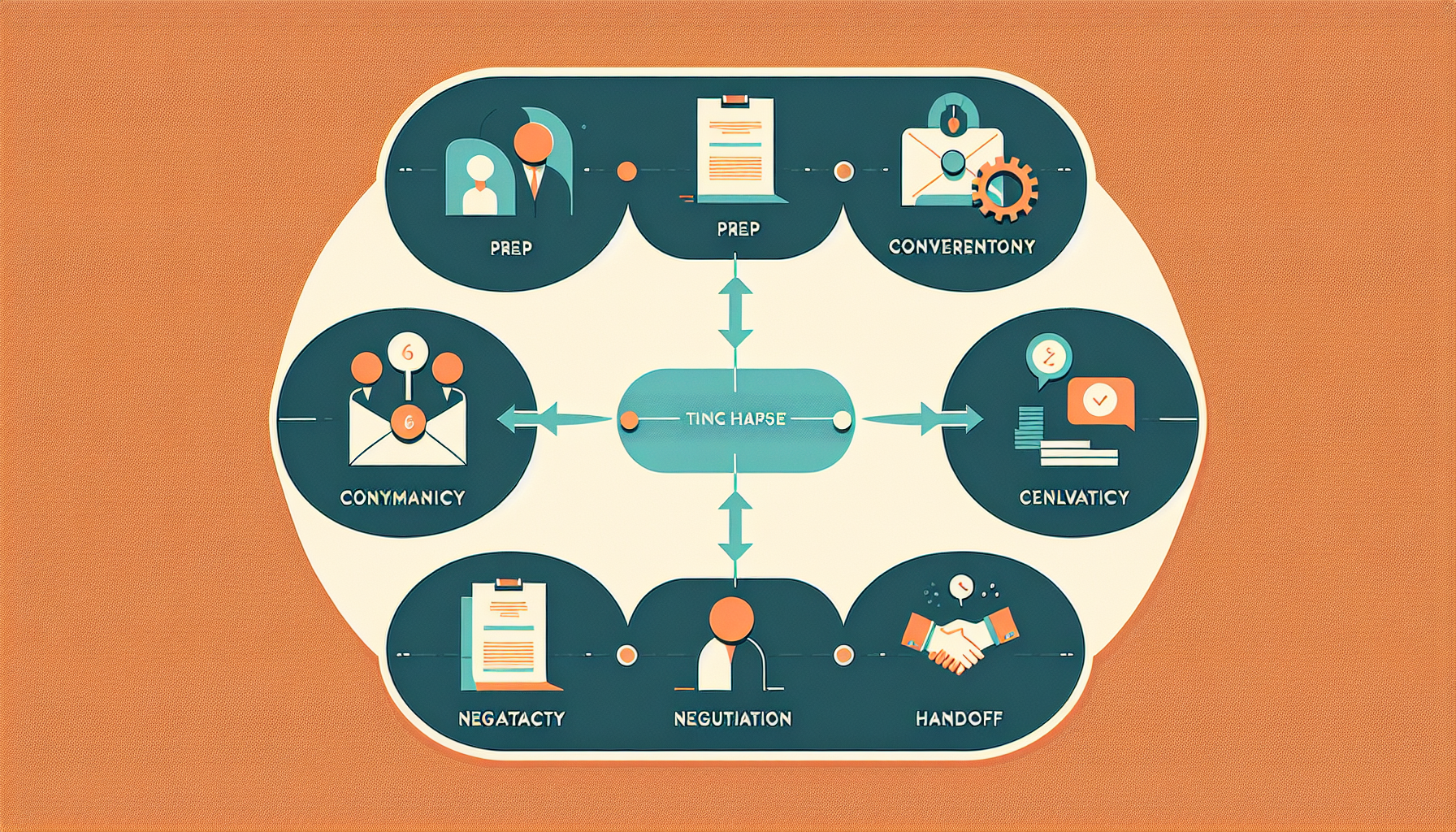
Phase 2: The Conversation Itself
This is the moment most employee-buyouts die. Get it right.
Pick the right setting
Not the shop. Not the office. Not in front of coworkers. Not at the end of a stressful day.
The right setting is neutral, private, and calm. A coffee shop breakfast. A quiet lunch. The owner’s truck driving to a customer visit. An offsite industry event. Something where the conversation can happen without anyone else noticing it happened.
Ideally, the setting suggests something slightly above normal — not casual “hey let’s grab a beer,” not formal “I have something serious to discuss.” Something in between that signals: I want to have a real conversation, but I’m not about to drop a bomb.
The exact opener
Don’t overthink the words. Something close to this:
“Hey, I’ve been thinking about my future and yours, and I wanted to run something by you before I let it sit any longer. You’ve talked a few times about eventually slowing down or selling the business. If and when you start thinking seriously about that, I’d want to be on the list of people you talk to. Not today — but I don’t want you to be surprised if I bring it up in six months either.”
Notice what that opener does:
- It’s respectful of the owner’s timeline, not your own.
- It doesn’t ask for a commitment. It asks to be on the list.
- It acknowledges this is a long conversation, not a single meeting.
- It gives the owner an easy exit: “Hey, I appreciate that, I’ll keep you in mind” is a perfectly fine non-answer.
What to listen for in the response
Owners respond in four rough categories. Each one tells you what to do next.
- “I’m not ready to think about that yet.” Accept it gracefully. Don’t push. Go back to work. Ask again in six months. You’ve planted the seed.
- “Funny you should mention it.” This is the gold one. It means they’ve been thinking about it too — sometimes for years — and were waiting for someone to raise the idea. Have a second conversation ready.
- “Let me think about it.” Normal. Give them space. Follow up in 2–3 weeks with a light touch.
- “Why are you asking? What are you up to?” They’re suspicious. Tell the truth: “I’m not interviewing anywhere, I’m not looking to leave. I just want to own a business eventually, and I’d rather own one where I already know the work than jump to a stranger.”
What NOT to say
- Don’t name a price. Not even a range. Not your first three conversations.
- Don’t criticize the business or how it’s run. “I could really clean up a few things around here” is the single dumbest thing you can say.
- Don’t mention specific employees as problems or opportunities. You have no standing to do that yet.
- Don’t set a deadline on yourself. “I’m going to buy a business within a year, either here or somewhere else” is a threat. It won’t land the way you intend.
Phase 3: Confidentiality and Coworker Dynamics
Once the conversation is live, you and the seller now share a secret. And you are terrible at keeping it. Everyone is.
The ground rules to set in writing
After your second or third substantive conversation, move to a short letter or email that establishes:
- Neither party will tell anyone else (including family members not directly involved in the deal) until jointly agreed
- If the deal doesn’t close, neither party will discuss it with employees or competitors
- Timeline: both parties will reassess in 90–180 days whether to continue
- If the owner receives an unsolicited offer from someone else, they’ll share it with you first
This isn’t a binding document. It’s a shared understanding, and the act of writing it down forces clarity.
If coworkers start to suspect
They will. Humans are good at sensing changed body language between two people who interact daily. The owner might stop tracking your job times as closely. You might start showing up ten minutes early to have coffee conversations. Somebody will notice.
When a coworker asks directly or hints at it, your answer is simple and boring:
“Nah man, just a lot on my mind lately. Nothing going on.”
Don’t lie elaborately. The more detail you add, the more you sound like you’re covering something up.
When it’s time to tell the team
At some point — usually after the LOI is signed and the deal has real momentum — you and the owner will need to decide when to tell the team. This is a joint decision, and it should happen together, in a group setting, with a clear joint message.

Phase 4: Negotiating Without Blowing Up the Relationship
You’ll go through the same LOI process any external buyer would. But two dynamics make this phase uniquely tricky.
The “family discount” trap
Many owners selling to an employee feel they should offer a discount — below market — as a gesture. This is tricky. If the discount is real and disclosed, great. But sometimes what happens is:
- The owner softly expects gratitude (“I’m practically giving this to you”)
- The buyer softly expects a deal (“I’ve put in ten years here, he owes me a break”)
- Neither is willing to say the number out loud
- The LOI comes in at full market and resentment builds silently
Fix: get pricing on the table with math, not feelings. Use an outside framework (SDE multiple, comparable transactions) so the conversation is about “what a third party would pay” rather than “what you think I’m worth.” The owner can choose to sell under market — that’s their call — but the anchor should be objective.
The “seller financing” conversation
Internal buyouts frequently use seller financing more aggressively than external deals. The owner trusts you, knows you’ll keep the business healthy, and may actively prefer a seller note that generates retirement income via an IRS installment sale to a cash sale that generates a tax bill.
This is usually good for both parties — but it has one trap: if the business runs into trouble in year two, you still owe your seller, who is still also your neighbor and maybe your mentor and possibly the grandparent to whoever watches your kids. The stress is real. Build a realistic debt-service cushion into your financial plan.
Pro tip: Read our off-season cash flow guide before structuring the note. Seasonal payment structures exist specifically for HVAC seller financing — higher payments in peak months, lower in slow months. Your seller will understand this because they managed the same cash flow for 20 years.
Phase 5: The Handoff
You signed. Congratulations. Now comes the weirdest part.
Some dynamics to prepare for:
- The first all-hands announcement. Let the seller lead it. Their endorsement of you carries more weight than anything you say.
- Your former peers are now your employees. This is harder than it looks. Some will handle it gracefully. Some will challenge your authority for six months. Some will ask for raises. Be firm, fair, and slow to change anything for at least the first 60 days. Our first-90-days playbook covers the operational transition in depth.
- The seller hovering. Agree in advance on how long they’ll stay and in what capacity. Read the seller transition consulting agreement guide — internal buyouts tend to need a shorter, clearer boundary, not a longer one, because employees default to asking the old boss for permission.
- Your identity shift. You’re not “one of the guys” anymore. The first time a tech you used to joke with asks for a raise, or has a performance problem, or wants to complain about another tech, you’ll feel it. That’s normal. That’s the job.
A Few Things That Will Surprise You
- You’ll learn things during diligence that you didn’t know after ten years there. Seller P&Ls are a genre of their own, and add-backs tell stories. Don’t take it personally that you’re discovering stuff now. It’s the nature of the thing.
- The seller might get cold feet at the worst possible moment. Right before close, sometimes at the closing table itself. They’re grieving. Retirement is a real loss for a lot of owners. Have grace, but have a contract.
- Your relationship with the seller will change permanently the moment you sign. You went from employee to peer to buyer to owner in 18 months. That is a lot. Plan to give the relationship space, not intensity, for the first year afterward.
The Bottom Line
Buying your boss’s HVAC business can be one of the cleanest, most efficient acquisitions a technician can do. You know the business. They know you. The seller gets a legacy buyer, the buyer gets a known asset, and the team gets continuity instead of chaos.
But the conversation is the whole game. Handle it with the respect it deserves: slow opener, no pressure, pricing based on math not feelings, confidentiality taken seriously, and a realistic sense that the relationship changes the minute you sign. Most internal buyouts that fall apart don’t fall apart over price — they fall apart over how the whole thing felt to the seller.
Make it feel good. Make it feel thought-through. Make it feel like you respect what they built. The rest is just paperwork.